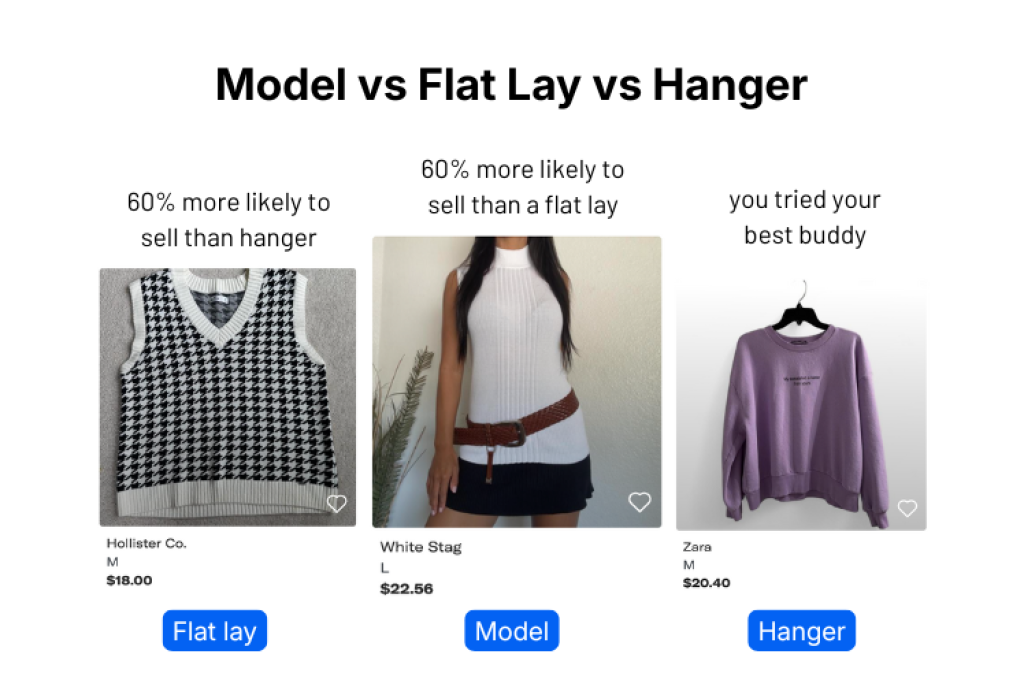
If you’ve ever debated whether upgrading your product imagery is really worth the effort, you’re not alone. With limited time, tight budgets, and ever-growing competition on platforms like eBay, Vinted and Google Shopping, many retailers and charity shops still rely on simple flat-lay or mannequin shots just to get items online.
But in the last 12-18 months, some of the world’s best-known fashion brands have quietly been testing a different approach: AI-generated, model-worn images. Not as a creative experiment - but as a performance lever.
To understand whether AI models genuinely improve sales outcomes, three very different retailers ran controlled experiments comparing standard product images with AI model imagery, each focusing on a different commercial metric.
The results surprised even the teams running the tests.
The experiments at a glance
Rather than lab tests or hypothetical simulations, this research draws on real listings, real shoppers, and real transactions. Each brand tested AI models against a specific challenge:
Get Dressed Collective (online fashion boutique): visibility and clicks
Prada (luxury fashion brand): shopper confidence and conversion rates
Arena (global swimwear brand): fear about item sizing and return rates
Each experiment isolated one core KPI to understand whether AI models influence behaviour in meaningful, measurable ways.
Experiment 1: Can AI models help listings stand out?
Brand: Get Dressed Collective
Category: Women’s fashion
Metric tested: Click-through rate
Get Dressed Collective wanted to know whether upgrading their imagery could help their listings compete in highly saturated spaces like Google Shopping and online marketplaces.
They compared their existing basic photoshoots with AI-generated model-worn images - keeping everything else constant, from pricing to descriptions. The goal was simple: would shoppers be more likely to click?
The answer was a clear yes. The uplift in engagement was significant enough to change how the team thought about imagery altogether - especially when weighed against the cost and effort of traditional photoshoots.
(Exactly how big the lift was, and what it meant for cost efficiency, is detailed in the full report.)
Experiment 2: Do AI models increase conversion for high-value items?
Brand: Prada
Category: Luxury shoes
Metric tested: Conversion rate
For premium and luxury items, second hand or otherwise, the biggest barrier to purchase is often hesitation. Shoppers want reassurance before committing - especially when prices are higher.
Prada tested whether showing shoes styled on AI-generated models (rather than standalone product shots) would help shoppers visualise scale, proportion, and style. The hypothesis was that confidence, not price, was the limiting factor.
The results showed a striking difference in buyer behaviour once AI model imagery was introduced - particularly for items where craftsmanship and fit matter.
This experiment and the results offers especially relevant lessons for charity retailers listing higher-quality or designer donations.
Experiment 3: Can better visuals reduce returns?
Brand: Arena
Category: Swimwear
Metric tested: Return rate
Returns are costly for any retailer, but for charities they can quickly wipe out margins altogether. Arena focused on one of the biggest drivers of returns: fit uncertainty.
By using AI models to show swimwear on realistic body types, Arena tested whether clearer visual cues could reduce guesswork for shoppers.
The outcome pointed to a meaningful reduction in returns - suggesting that visuals alone can play a powerful role in setting the right expectations before purchase.
Why this matters for charity and resale retailers
Across all three experiments, one theme emerged: imagery isn’t just about looking good - it directly affects revenue, workload, and stock flow.
More clicks mean more chances to sell donated stock
Higher conversion means raising more crucial funds for your amazing work
Fewer returns mean less wasted time and fewer margin losses
AI models won’t replace every photo. But used selectively, the data suggests they can deliver outsized gains where it matters most.
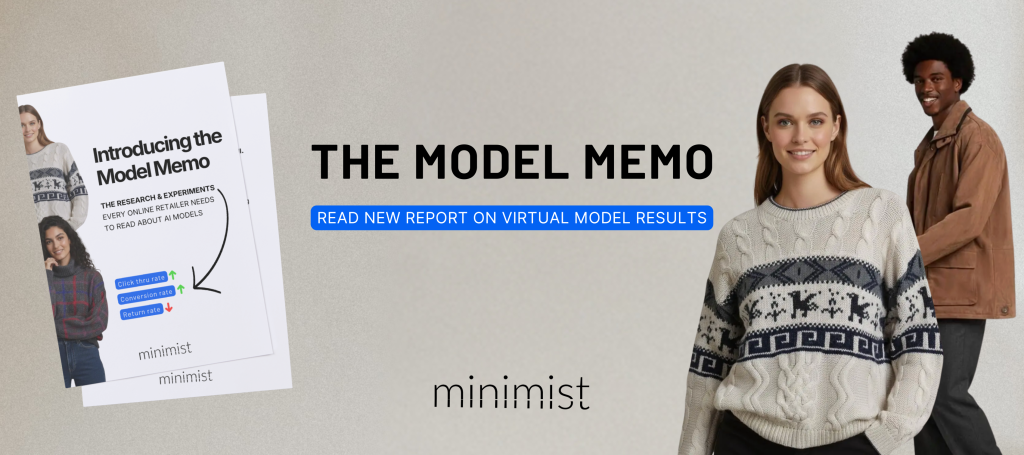
Want the full results?
This article only scratches the surface. The full resource breaks down each experiment in detail, including performance lifts, category-specific insights, and practical implications for resale and charity retail teams.