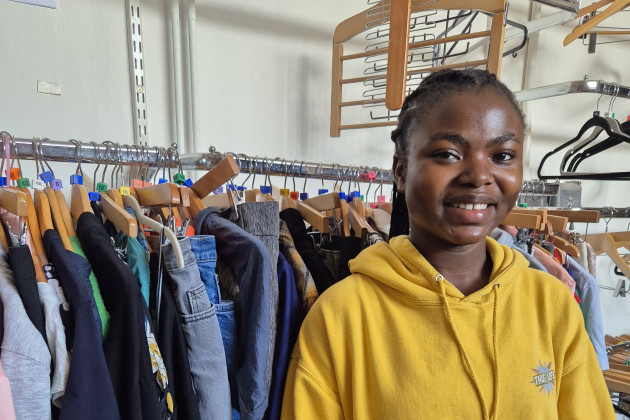
With 10,100 charity shops nationwide and 23,500 full-time equivalent (FTE) staff supported by over 203,600 volunteers, our amazing sector is a powerful force for good.
Charity retail also offers a wide range of career pathways, making it appealing for people who are looking for meaningful work, as well as opportunities to develop new skills.
Source: Charity Retail Association
People
Charity shops provide accessible roles at many levels - from entry-level to management, from part-time or flexible hours to full-time work. For many people, they offer a chance to re-enter the workforce, build new skills, or work in a supportive community environment.
Beyond paid staff, charity retail relies on volunteers. For over 200,000 volunteers, shops offer opportunities to contribute, meet people and gain valuable experience, often in a friendly, inclusive setting.
For customers and donors, charity shops offer affordable, quality goods as well as a local place to give, shop and support a cause. The blend of commerce and social good is unique to the sector.
Being people-centred also makes charity retail a good place to develop transferable skills that can support career progression.
Social value
An analysis by the Charity Retail Association (CRA) found that in 2022 UK charity shops generated £75.3 billion of social value.
For every £1 invested, the sector delivers approximately £7.35 in social value.
These findings remain a powerful example of the impact charity retail can have. As the sector continues to grow and adapt, it is likely that the social value generated today may be even greater.
Charity retail supports communities. For those working in the sector, knowing that their efforts contribute to wide-reaching social and environmental benefit can be hugely motivating. CRA members can access the full Social Value Report here.
Sustainability
Charity shops are at the heart of a thriving reuse economy! By giving donated goods a second or even third life, they reduce waste and help towards limiting the demand for new manufacturing.
Many shoppers now embrace second-hand as a first choice - motivated by cost-of-living pressures or environmental concern. Charity retail offers an accessible way to live more sustainably while supporting causes.
A strong example of what charities can achieve in this space can be seen in The Salvation Army Trading Company Ltd’s Social and Environmental Impact Report, which highlights the scale and ambition behind sustainability efforts within charity retail.
Adaptability
Even though charity retail has faced significant challenges in recent years, including for some organisations, difficult decisions around shop closures and restructuring, the sector continues to adapt with resilience.
Many charities are embracing online resale, refining donation processes and exploring new shop formats. This reflects a sector responding to change with creativity and purpose.
For jobseekers, this shift means roles are developing in new directions - from ecommerce and logistics to volunteer coordination and community outreach. While the landscape is changing, there are still diverse opportunities for those looking to build a meaningful career in charity retail.
Why charity retail matters
Charity retail isn’t ‘just shops’. It’s livelihoods, community support, social value, and environmental action. It offers accessible jobs, volunteering opportunities, affordable goods, and a way for people to contribute to causes they care about.
If you’re looking for a career or volunteering path that combines purpose, flexibility and impact, charity retail could be it!
Explore careers opportunities advertised with CRA here.
If your organisation is looking to hire, you can explore the benefits of advertising your vacancies with the CRA and view our current rates here.